




How Much Sleep Do You Need? A Practical Spring Reset for South Africans
By the Restiq Sleep team
An early alarm, a long commute and one more task after supper can leave sleep squeezed into whatever time remains. If you are trying to look after your rest this spring, start with your timetable rather than a shopping list. A useful routine has to fit the life you actually lead.
Start with enough time, not a perfect number
The US National Heart, Lung, and Blood Institute recommends seven to nine hours of sleep for adults. Individual needs vary. Time spent in bed is not automatically time asleep, so leave space for settling down rather than treating the moment you put down your phone as the moment sleep begins. Read the adult sleep guidance.
For example, if you must get up at 05:30 and want an eight-hour sleep opportunity, 21:30 is a useful starting point for planning bedtime. That is a planning example, not a rule everyone must follow. Work backwards from your own start time and identify which evening tasks can happen earlier.
Build an evening that is easier to finish
Choose a repeatable wake-up time and allow a quiet period before bed. Keep the room comfortably cool, dark and quiet. Caffeine late in the day and alcohol near bedtime can interfere with sleep. These are established sleep-habit recommendations, not a promise that a routine will solve every sleep problem. See the NHLBI healthy sleep habits guide.
For a busy Gauteng household, the practical work might be packing lunch before supper, agreeing on when the television goes off, or moving tomorrow’s work clothes out of the bedroom. Pick the task that most often delays you. You do not need to overhaul the whole household in one night.
Try this seven-day reset
- Days 1–2: Write down bedtime, estimated time asleep, wake-up time and how alert you feel during the day. Use paper if a phone draws you back into scrolling.
- Days 3–4: Move one recurring evening task earlier. Choose a manageable wind-down activity, such as a few pages of a book.
- Days 5–7: Keep the new arrangement and note what still gets in the way. Discuss shared-room noise or lighting with the people affected.
This exercise is an observation tool, not a sleep score. Look for patterns you can act on: a late work call, uncomfortable bedding or a schedule that simply leaves too little time.
Know when to ask for help
If sleep problems persist or tiredness interferes with daily life, talk to a healthcare professional. Regular waking, ongoing tiredness despite adequate time in bed, or interrupted breathing deserve attention. A new mattress is not a treatment for a sleep disorder. The CDC explains sleep quality and when to seek advice.
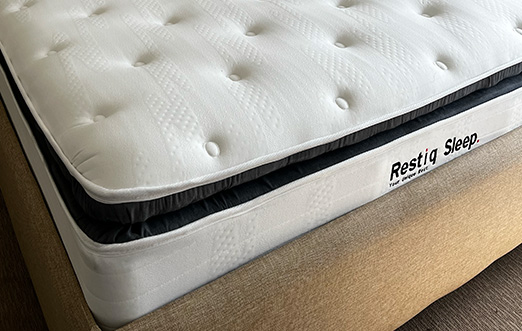
Comfort is one part of the picture. If your bed is uncomfortable, explore our mattress range and ask the Restiq team about your comfort preferences, while continuing to protect enough time for rest.
Sources and further reading


